At Full Circle Orthopedics, we understand that knee pain can severely impact your quality of life. For patients suffering from localized arthritis or damage within a specific area of the knee, a partial knee replacement might be the ideal solution. This procedure is designed to alleviate pain and restore function while preserving healthy bone and tissue.
Our experienced orthopedic surgeons in Clearwater and Palm Harbor, Florida, are dedicated to offering innovative solutions tailored to individual needs. With our commitment to patient education and satisfaction, we guide you every step of the way.
Avoid Total Knee Replacement
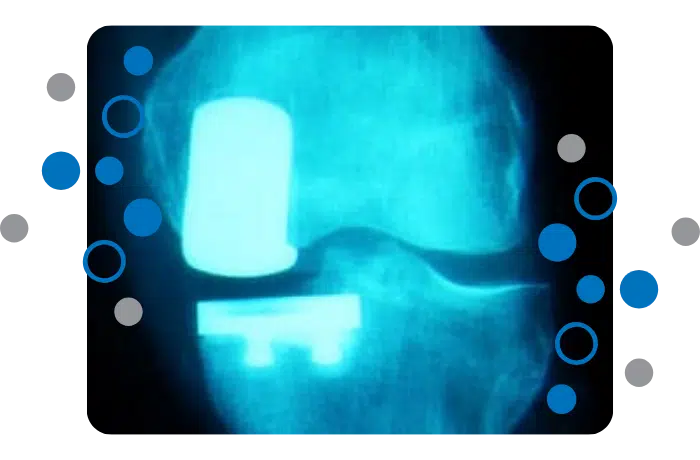
Our orthopedic surgeons provide Partial Knee Replacement (resurfacing) in place of Total Knee Replacement when possible. They will repair your knee rather than replace it!
Partial knee replacement (resurfacing) is a small-incision procedure that can greatly benefit people who have arthritis in only one compartment of the knee. Instead of replacing the entire knee, partial knee replacement (resurfacing) replaces only the side of the knee damaged by arthritis. The incision is small, there’s less pain, faster recovery and most patients are walking within 2-3 days.
Patient benefits are immense, including:
- A partial knee implant
- 23 hours – 1 day hospital stay
- No suture removal
- Back to activities in 4-6 weeks
- No physical therapy
- No blood transfusions
Why Have a Partial Knee Replacement (Resurfacing)?
Choosing a partial knee replacement can be a significant decision, and knowing the benefits can help you make an informed choice. Here are key reasons to consider this option:
Minimally Invasive
Partial knee replacement procedures involve smaller incisions, leading to reduced scarring and quicker recovery.
Preserve Natural Structures
Only the damaged compartment of the knee is replaced, leaving healthy bone and cartilage intact.
Faster Rehabilitation
Many patients experience less post-operative pain, allowing for a quicker return to daily activities and hobbies.
Minimally Invasive Knee Surgery
An Alternative to Total Knee Replacement
Patients who have arthritis on the inside or outside part (compartment) of the knee may not need a total knee replacement to relieve pain and restore function. An alternative option, Partial Knee Replacement, restores only the side of the knee that is damaged by arthritis. A resurfacing implant is much smaller than a total knee implant and does not disturb the knee’s healthy tissues.
Total vs. Partial Knee Replacement
Understanding the difference between partial and total knee replacements is crucial in deciding the right procedure for you. Here’s how they compare at Full Circle Orthopedics:
Extent of Damage
Total knee replacement is ideal for patients with widespread arthritis, while partial knee replacement targets localized issues.
Surgical Technique
Total replacements involve the removal of the entire knee joint, while partial replacements only modify the damaged area.
Recovery Time
Patients who undergo knee surgery for partial replacement typically enjoy a shorter recovery period and earlier mobilization.
A Closer Look at Partial Knee Replacements
History of Partial Knee Replacement (resurfacing)
The first Partial Knee Replacements (resurfacing) date back to the early 1970s and, like early total knee replacements, showed mixed success. But, over the last 25 years implant design, instrumentation, and surgical technique have improved, making resurfacing a successful treatment when osteoarthritis is advanced in one compartment of the knee.
Who Can Benefit From a Partial Knee Replacement (resurfacing)?
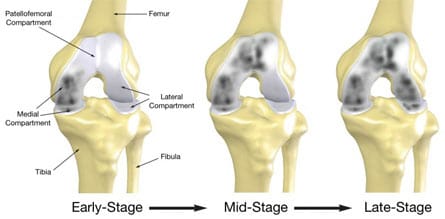
The treatment is designed for patients whose x-rays show arthritis in one knee compartment and who have not had satisfactory pain relief with non-surgical treatment.
When shots and pills fail and lifestyle is impaired, a Partial Knee Replacement (resurfacing) can be a step in the right direction. Knee x-rays, taken while standing, can indicate if a resurfacing procedure may be right for you. The x-ray must show loss of cartilage in one of the knee’s two weight-bearing compartments.
Overnight Hospital Stay
Benefits of less invasive procedures like Partial Knee Replacements (resurfacing) include less discomfort, a shorter hospital stay (23 hours – 1 day), no physical therapy, and more rapid healing. Most patients walk on their resurfaced knee the same day as surgery and are generally released from the hospital the next day. Within two weeks, most patients are driving a car and resuming daily activities.
Loss in Cartilage
Osteoarthritis of the Knee
The Partial Knee Replacement Process
Smaller Incisions/Hidden Sutures. First, the entire knee is examined using a video camera and an arthroscope. If the kneecap and one weight-bearing surface appears healthy, then a Partial Knee Replacement (resurfacing) is indicated.
A 3″-4″ incision is made, rather than the 6″-8″ incision required for total knee replacement. For a more pleasing appearance after surgery, small, self-dissolving sutures, like those used by cosmetic surgeons, are hidden underneath the skin. No external sutures or skin clips are used.
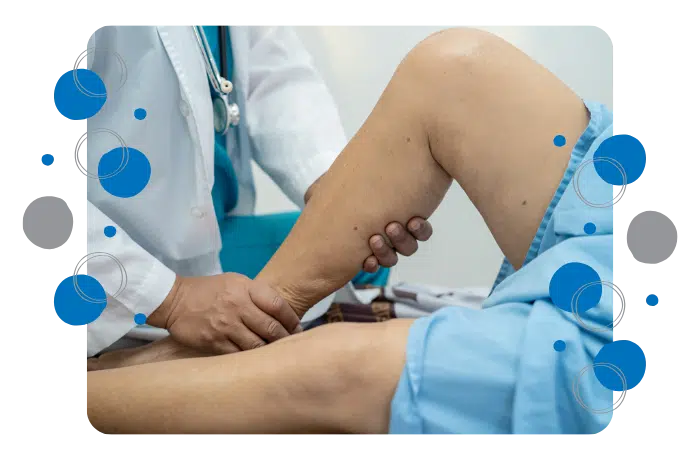
Preparing for Knee Surgery
Prior to undergoing knee surgery, patients are encouraged to have a preoperative consultation with their orthopedic surgeon to discuss any underlying health issues, medications, and lifestyle factors that might impact their surgery or recovery. It’s also beneficial to engage in prehabilitation, which involves specific exercises designed to strengthen the muscles surrounding the knee and improve flexibility. This not only aids in the surgical process but can significantly enhance recovery times. Being well-prepared will set the stage for a more successful recovery and a return to your active lifestyle.